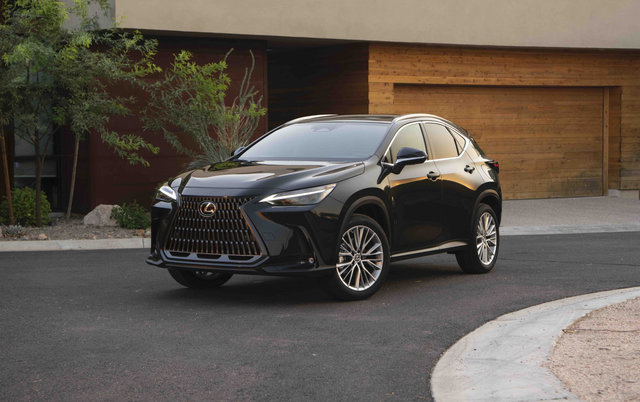
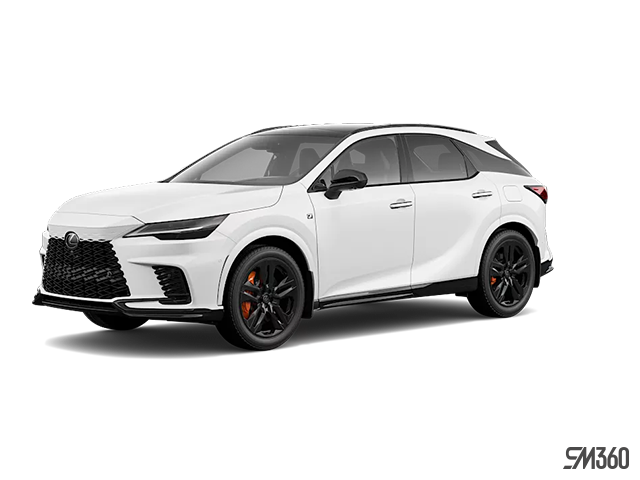
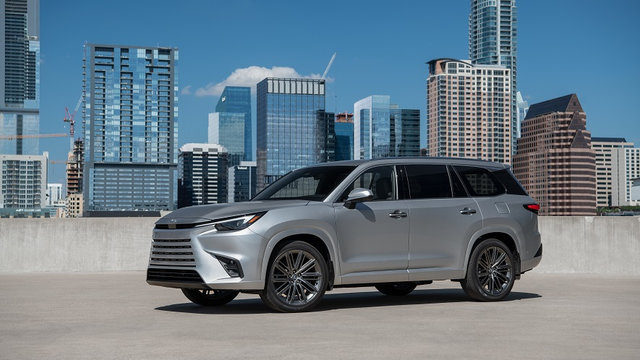
Choosing between two Lexus SUVs means deciding what luxury looks like in your daily life. The 2026 RX and NX share the same focus to craftsmanship, but they solve different problems for Ontario drivers. The RX delivers more power and towing capability for families who need weekend versatility.
The NX maximizes cargo volume and offers a lower entry point for buyers prioritizing space efficiency. Both vehicles earn their place in the Lexus lineup - the question is which one matches how you actually use an SUV.
|
Feature
|
2026 Lexus RX
|
Lexus NX
|
|
Horsepower (Max)
|
367 hp (RX 500h)
|
304 hp (NX 450h+)
|
|
Fuel Economy (Combined)
|
6.5 L/100km (RX 350h)
|
6.0 L/100km (NX 350h)
|
|
Cargo Volume
|
838 L
|
1328 L
|
|
Towing Capacity
|
3500 lbs
|
2006 lbs
|
|
Electric Range
|
60 km (RX 450h+)
|
60 km (NX 450h+)
|
What the Powertrains Actually Deliver
For buyers who measure luxury in acceleration and passing confidence, the RX 500h's 367 hp and 406 lb-ft of torque create a different driving experience than the NX's maximum 304 hp output.
The RX 500h pairs its 2.4-litre turbo inline-four with a 6-speed automatic transmission that delivers immediate throttle response - noticeable when merging onto Highway 401 during rush hour or overtaking slower traffic on rural Ontario roads.
The NX 450h+ generates 304 hp through its 2.5-litre four-cylinder PHEV system, which prioritizes electric-first operation over outright power. For drivers whose daily routes stay within 60 km, the NX 450h+ and RX 450h+ both offer the same electric range, allowing most commutes to run purely on battery power.
The difference emerges when you need sustained highway performance - the RX 500h's turbocharged architecture maintains power delivery at higher speeds without relying on battery charge.
If your priority is hybrid efficiency without plug-in infrastructure, the RX 350h produces 246 hp through its electronically controlled continuously variable transmission, while the NX 350h delivers 240 hp with a combined fuel economy of 6.0 L/100km compared to the RX 350h's 6.5 L/100km.
For buyers who track fuel costs closely, the NX 350h's efficiency advantage translates to meaningful savings over a year of Ontario driving.
The 490-Litre Cargo Gap
The NX's 1328 litres of cargo volume versus the RX's 838 litres offers the most meaningful functional difference between these vehicles. For families who regularly transport sports equipment, camping gear, or renovation supplies, the NX's additional 490 litres changes what fits without folding seats.
A family of four heading to Algonquin Park for a weekend can load full-size coolers, tents, and sleeping bags in the NX without Tetris-level packing strategy.
The RX's 838 litres still accommodates weekly grocery runs, hockey bags, and luggage for most trips - it simply requires more intentional loading for maximum-capacity scenarios.
Buyers who prioritize other capabilities over absolute cargo volume will find the RX's space adequate for typical family use, while those who frequently haul larger items will appreciate the NX's extra cubic capacity.
Where 3500 lbs of Towing Matters
The RX 350h Premium's 3500 lbs towing capacity when properly equipped with the towing package significantly outpaces the NX 350 AWD's 2006 lbs rating.
For Ontario cottage owners who trailer a boat, jet skis, or a small camper, the RX handles loads the NX cannot legally tow. A 20-foot aluminum fishing boat with trailer typically weighs 2800-3200 lbs - within the RX's capability but exceeding the NX's limit.
If your towing needs stay below 2000 lbs - utility trailers, small watercraft, or bike racks - the NX's capacity covers those scenarios.
The RX's towing advantage matters specifically for buyers who already own or plan to purchase recreational equipment in the 2500-3500 lb range, where the difference between these vehicles determines what you can legally haul.
Technology That reshapes the Daily Commute
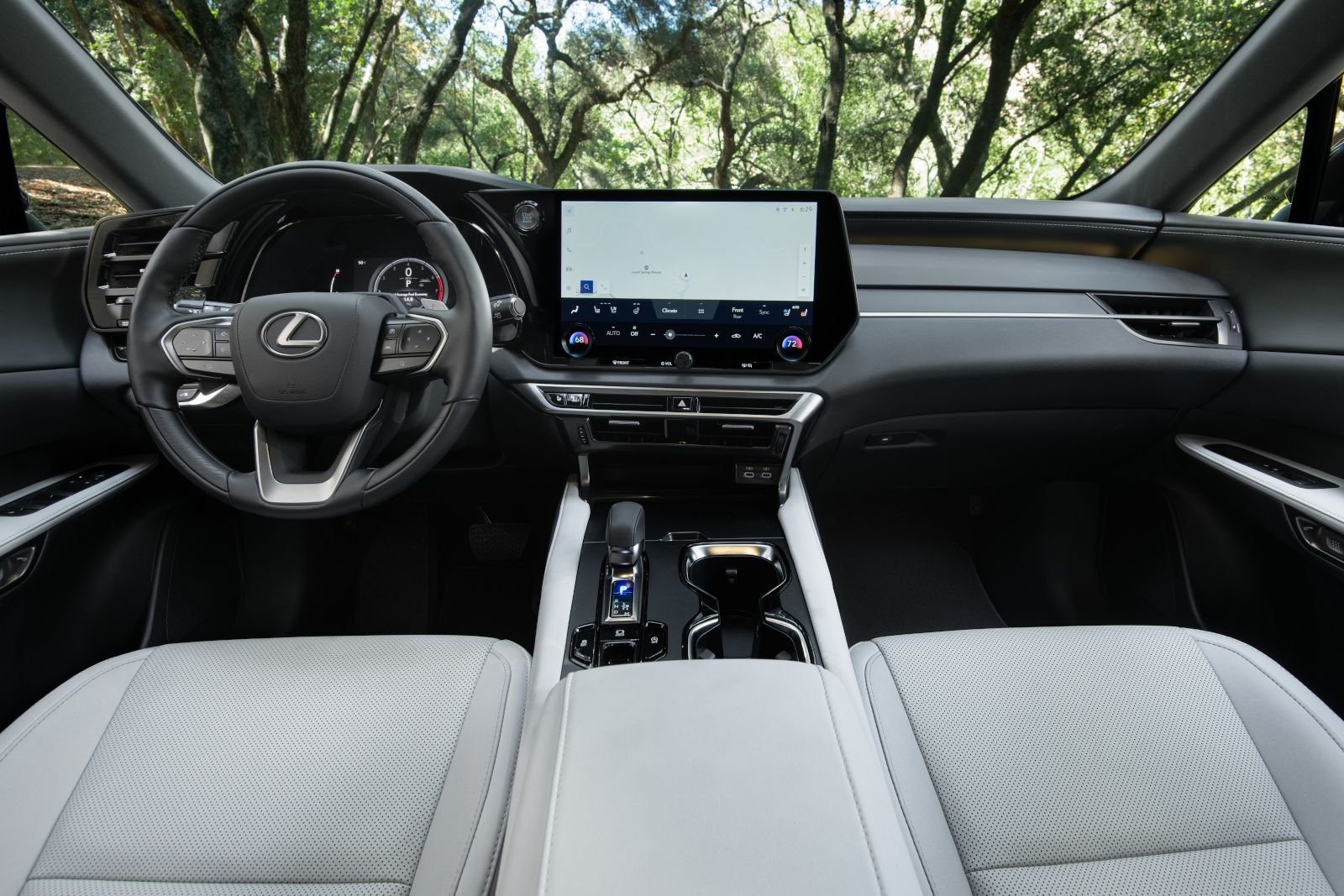
The RX's 21-speaker Mark Levinson Premium Audio System creates a different cabin environment than the NX's 17-speaker setup. For drivers who spend 60+ minutes daily in traffic, the RX's additional speakers deliver spatial audio clarity that makes podcasts, audiobooks, and music sound studio-quality.
The RX also includes a head-up display and digital display rear view mirror - features that keep critical driving information in your sight line without requiring you to glance down at the instrument cluster.
The NX counters with its own Lexus Interface system, 14-inch touchscreen display, and wireless charging dock. Both vehicles offer Apple CarPlay, Android Auto, and natural language voice assistants.
The NX's technology suite covers essential connectivity and convenience - the RX's additions focus on premium audio and driver information display upgrades that matter most to buyers who consider the cabin a workspace or entertainment environment.
Safety Systems Beyond the Baseline
Both vehicles include comprehensive active safety technology, but the RX's Lexus Safety System +3.0 adds bicycle and motorcycle detection to its Pre-Collision System - a meaningful upgrade for Toronto, Ottawa, and other urban Ontario environments where cyclists and motorcyclists share lanes.
The system identifies two-wheeled vehicles earlier and with greater accuracy than standard pedestrian detection alone.
The NX provides:
- Panoramic View Monitor
- Digital rearview mirror
- Advanced Park system
- Blind Spot Monitor with Rear Cross Traffic Brake
- Lane Change Assist
The RX includes those features plus:
- Front Cross Traffic Alert
- Traffic Jam Assist
- Road Sign Assist
- Enhanced bicycle and motorcycle detection
For buyers navigating dense city traffic or suburban intersections with heavy bike commuter traffic, the RX's additional detection capabilities reduce blind spot risks that standard systems miss.
For buyers who prioritize cargo volume and fuel efficiency over maximum power and towing, the NX delivers Lexus build quality and technology at a more accessible price point.
The RX's higher entry price includes more powerful drivetrain options, greater towing capacity, and premium technology features that justify the cost for buyers who use those capabilities regularly.
A buyer who tows a 3000 lb trailer monthly and values 367 hp performance will find the RX's price difference reasonable. A buyer who rarely tows and prioritizes cargo space will see better value in the NX.
Which Luxury SUV Is Right for You?
If you tow recreational equipment regularly, prioritize maximum horsepower for highway passing confidence, and want the most advanced audio and safety technology Lexus offers, the RX 500h or RX 450h+ aligns with those priorities.
The RX's 3500 lbs towing capacity and 367 hp output create a vehicle built for Ontario drivers who need weekend versatility alongside weekday luxury.
If your priority is maximum cargo volume for family gear, sports equipment, or DIY projects, and you value fuel efficiency and a lower entry price, the NX 350h or NX 450h+ delivers those capabilities without compromise.
The NX's 1328 litres of cargo space and 6.0 L/100km combined fuel economy suit buyers whose definition of luxury includes practical space and efficiency.
How often do you actually tow, and what does that trailer weigh? Your honest answer to that question points you toward the right Lexus SUV. Visit Erin Park Lexus to compare both vehicles in person and determine which cabin, cargo area, and powertrain match your actual driving life in Ontario.